Behind every investment, every purchase, every postponed financial decision, something stronger than logic is at work. Fear. Comparison. Hope. Habit.
Limited first run. Reserve now to hold your place.
You know your home loan could be on a lower rate. But the paperwork feels endless, so the bigger EMI quietly rolls on, year after year.
A simple monthly SIP would make life easier. Instead you wait for the perfect moment, and the gains you wanted slip by while you wait.
You can feel AI reshaping your field. You keep meaning to learn the new tools. Somehow, next month never arrives.
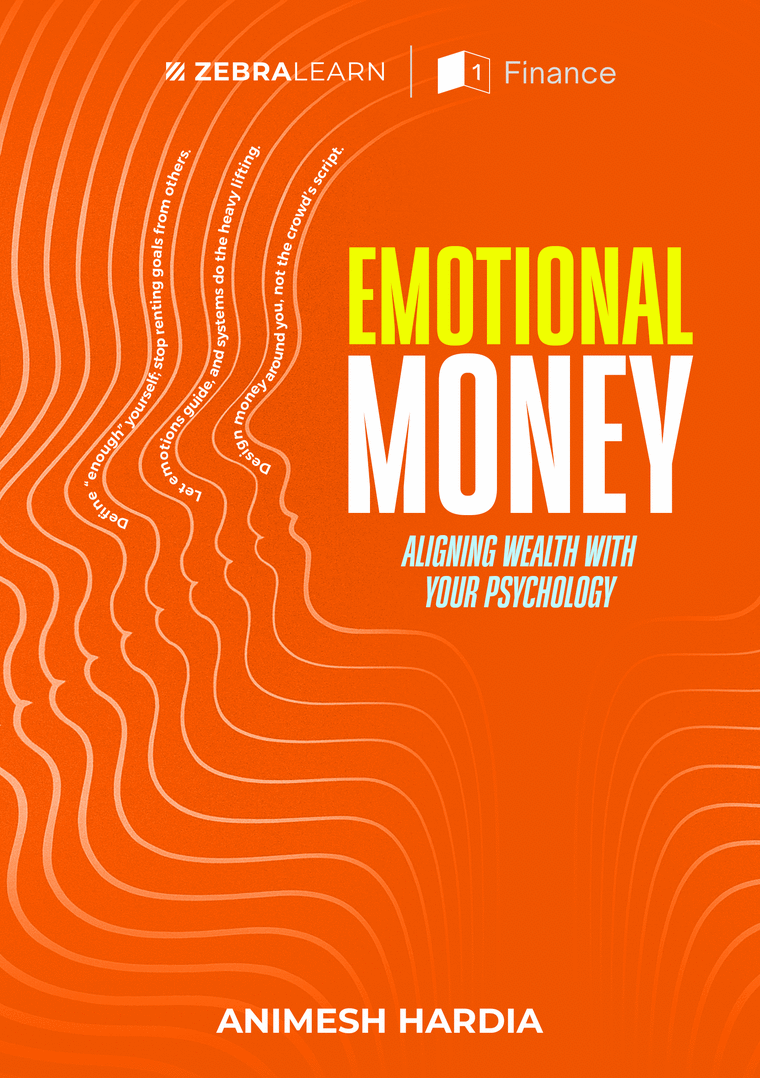
Emotional Money is a plain-spoken guide to understanding why you do what you do with money, and building habits that fit how you are actually wired.
Emotional Money doesn't ask you to be more rational. It asks you to be more honest. Drawing on behavioural finance, psychology, and real money stories, the book shows why willpower keeps failing and how systems, defaults, and self-awareness quietly do the work instead.
You won't find shortcuts here. Or market predictions. Or templates designed for someone else's life. What you will find is a calmer relationship with money: clearer choices, smarter defaults, and habits that compound into peace, not just net worth.
They shape more of your money choices than you would guess. The work starts with noticing them, instead of trying to switch them off.
Willpower fades. Habits last. Set up a few good ones and the smart money choice starts happening on its own.
Use your money for the life you actually want, the one that fits you, not a copy of what everyone around you is buying.
You did everything right. More income, more boxes ticked. So why does it still feel off?
Your brain runs ancient code in a modern money world. Meet the wiring you were born with.
Long before you earned a rupee, you inherited a money story. Here's how to read it.
Two minds argue every time money moves. Learn which one to trust, and when.
What a money life you can actually live with looks like, and how to build it.
You often know the smart money move and still don't make it. The reason has more to do with habit than discipline.
Behavioural scientist Wendy Wood spent 30 years studying habits. She found that about 43% of what we do on a given day is pure habit, the same actions repeating on autopilot, with no fresh decision involved. How you spend, save, and invest is part of that. So the book works on your habits and your everyday defaults, the part that quietly runs your money life, rather than leaning on willpower that runs out.
The first run is small. Leave your details and I'll send your copy as soon as it's ready.
I'll message you when your copy is ready. Know someone who'd want one? Send them this page.
Share on WhatsApp